How the Potential Shutdown of TikTok will Affect Marketing for Businesses

By Paul Henry III

TikTok, which Chinese technology firm ByteDance owns, faces the threat of a total ban in the US, leading to the question of what problems this potential ban will cause for businesses that rely on TikTok.  Before discussing what this means for these businesses, let’s examine the logistics of what is happening in Washington and what progress lawmakers have made on banning the platform.

The Ban Is Threatening Small Businesses’ Revenue Streams

The US has been voting to ban the vastly popular social media platform, which has 170 million US users, due to national security concerns. However, there is much more to it than people not being able to watch their favorite creators. Around 7 million small businesses rely on the social media platform to sell products and drive growth. In fact, it drove $15 billion in revenue for US small businesses in 2023 alone.

Lawmakers have brought up concerns about the platform being owned by ByteDance, and that it is bound to the Chinese government, which could demand access to the data of US users whenever it wants. Due to these concerns, Rep. Cathy McMorrua said, “We have given TikTok a clear choice.” That choice is to separate from their parent company, ByteDance, and be able to remain operational in the US, or they will face the consequences, which is a ban on the platform in the United States.

TikTok users and creators are in uproar over the platform’s impending ban. From making videos to calling senators, they are doing everything in their power to stop the ban discussion.

Most Representatives Voted To Ban TikTok

Specifically, the progress that has already been made on the ban has been voted on in the House of Representatives, with 197 Republicans voting for it and 15 against it. On the Democratic side, 155 Democrats voted for and 50 against. A vote of 352 for and only 65 against means that the bill was passed, and unless TikTok divests from ByteDance, the application will be removed from the App Store. So the clock for TikTok to decide on what to do is slowly ticking down.

As part of the political discourse surrounding the potential ban on TikTok, it’s important to understand what this means for the 7 million small businesses and other users that rely on the platform as a main source of marketing. The ease of use and ability to get millions of views and thousands of followers off of a single video just by posting and letting the algorithm take care of the rest make it an ideal platform unlike any other for marketing. With platforms such as YouTube and Instagram, it can take years to grow a following and get a lot of impressions.

 TikTok Is Crucial For Many Small Businesses

39% of small businesses say that TikTok is critical to their business’s existence, and 69% say that the platform has led to increased sales in the last year. Creators such as Tori Dunlap, who goes by @herfirst100k on TikTok and has 2.4 million followers, said that the banning of the platform would be devastating for content creators who use the service to make money because we are living in a world where it’s impossible to have one traditional source of income. More than half of small retailers and restaurants say that it is extremely valuable to their overall marketing performance.

 One example of a small business success story that has mainly used the platform for marketing is Brand Pierre. This brand, created by Pierce Woodward, which currently has 1.6 million followers and 60 million likes, makes fashionable rings out of new and vintage spoons, creating unique designs. It has garnered the attention of celebrities such as Benny Blanco and D D’Amelio. What started out as a hobby for Pierce to do during COVID has turned into a thriving business all because of TikTok. When turning this hobby into a business, after the immense growth of his account on the platform, he grossed six figures in the first three months and made twenty thousand rings in his first year.

Where Will Businesses Go If The Ban Goes Into Effect?

Generally speaking, a ban on the platform will lead to many small businesses losing a large revenue stream and a large potential for job loss. So, where will businesses divert their marketing efforts? Most likely, they will move to focus on other platforms that have features similar to those of TikTok, such as Instagram or Youtube. The difference is the algorithm of TikTok compared to other platforms. Julian McAuley, a professor of computer science at the University of California said that what sets TikTok apart is that they have “fantastic volumes of data, highly engaged users, and a setting where users are amenable to consuming algorithmically recommended content.” 

What Should You Do If You’re A Small Business That Relies On TikTok?

If you’re a small business heavily relying on TikTok, the best suggestion is to diversify your marketing efforts to other platforms. This is to reduce your reliance on any single platform, so moving to different spaces, such as Instagram and YouTube, will help. You will also be able to repost your content from TikTok and post it on these platforms because they have similar features. This is where the Martin Hall Agency comes in handy. We will be able to help any business diversify their social media content and make the transition to using other platforms effortlessly. 

For further information about and to dive deeper into this topic, check out the additional links below:

TikTok Statistics: The Impact of TikTok on Business and Social Media

The House passed a TikTok ban bill. But is the app really a national security threat?

The grim reality of banning TikTok

TikTok Crackdown Shifts Into Overdrive, With Sale or Shutdown on Table

By Kaleb Ridlon

In our ever-evolving world, societal and technological changes are reshaping how we connect, communicate, and do business. One of the most significant transformations in recent years has been the rise of social media, and its impact on various aspects of our lives is undeniable. But what if we told you this digital revolution isn’t just about memes and cat videos? It’s about creating exciting opportunities for boxing promotion, and that’s precisely what we’re here to discuss.

Cast your mind back 15 years to 2008, when information and entertainment were disseminated through traditional means – newspapers, billboards and radio. While platforms like Facebook existed, they primarily aimed to connect friends and family, not promote brands or businesses. This era posed a considerable challenge for endeavors like boxing promotions, struggling to expand their viewership and attract new audiences.

But then, something extraordinary happened: TikTok emerged on the scene. Initially a platform for dancing and singing enthusiasts, it swiftly transformed into a powerful tool for influencers and entrepreneurs to reach vast audiences rapidly. Today, TikTok reigns supreme as the most popular social media platform, especially among the younger generation. Recognizing its potential, companies, brands, and streaming promotions started migrating to TikTok, offering fans and viewers a more accessible way to engage with sports entertainment and news media.
In this blog post, we’ll delve into the dynamic world of social media and how it has become a game-changer for boxing promotion. We’ll explore the innovative strategies and tactics that savvy agencies and corporations harness to leverage this digital landscape to their advantage. So, if you’re keen to unlock social media’s exciting possibilities for your boxing promotion, read on!

So, Why Tik Tok

TikTok has emerged as a pivotal player in the marketing world, and its significance in promoting boxing cannot be overstated. While it’s true that TikTok initially gained popularity among the younger generation, its influence extends far beyond mere trends and brand engagement. In 2020, during the height of the pandemic, TikTok witnessed a notable shift in its user demographics. While nearly 70% of users were under 25, a growing number of older users joined the platform. This shift signaled that even the older generation was adapting to the platform and actively engaging with it.

However, the real game-changer came in 2021 when TikTok’s user demographics became nearly evenly distributed across age groups. This transformation meant that older users were present and actively participating on the platform. As a result, TikTok became an adaptable space for individuals of all ages, transcending generational boundaries. 

https://www.insiderintelligence.com/charts/global-tiktok-user-stats/

This diversity in demographics is a treasure trove for brands involved in boxing promotions. It means that TikTok offers a unique opportunity to reach a broad and diverse audience, spanning both passionate young boxing enthusiasts and the older generation with a long-standing love for the sport. Leading brands such as Chipotle, GoPro, and the NBA have recognized this potential and harnessed TikTok’s power as a marketing tool. They have used the platform to bring sports, news and cultural content to various audiences. Whether streaming boxing highlights or broadcasting essential events, TikTok has proven to be a dynamic platform that caters to people’s interests across cultures and generations.

Streaming Sports and TikTok

When it comes to sports and entertainment streaming, personal preferences vary, but there’s one universal truth: the simplicity of staying updated with your favorite sports and entertainment. Accessing certain sports, such as boxing and MMA, has often been challenging due to factors like high entry costs or the search for a reliable online stream that doesn’t suffer from constant buffering issues. Streaming on TikTok has been a game-changer in improving relationships with boxing and MMA enthusiasts.

TikTok addresses these challenges by offering a unique experience in sports consumption. The platform enables users to focus on the most critical aspects of a fight or a basketball/football game, rather than requiring them to watch the entire match. While some traditionalists may not fully embrace this approach, entrepreneurs and business owners in the sports industry see it as a significant advantage. 

https://www.cnbc.com/2022/04/29/mark-cuban-says-tiktok-is-the-future-of-sports-media-heres-why.html

Mark Cuban, a prominent figure in the sports world, has highlighted TikTok’s role in shaping the future of sports media. He emphasizes how TikTok allows users to customize their sports content, making it more accessible and engaging for younger audiences who might not have the patience for full-length games. 

By providing tailored streams of their favorite moments, TikTok ensures that fans can enjoy the highlights without the need for prolonged attention spans, as Mark Cuban noted in a recent interview. This shift in consumption patterns is not just about convenience; it’s about transforming the way we experience sports, making them more dynamic and engaging for enthusiasts of all ages. 

“If my son and I like Luka Doncic’s dunks, NBA stuff, and dogs, [we’re] going to get a stream of that … That’s the future of sports media because we’re not going to get our 16-year-old or 12-year-old or 15-year-old to sit for an entire game.” 

Mark Cuban, Investor and Dallas Maverick’s owner

Moreover, TikTok’s influence extends beyond popular sports like basketball and football; it has revitalized sports like baseball, which traditionally faced challenges due to slower-paced gameplay. TikTok’s approach, similar to the NFL’s red zone, showcases the most exciting and action-packed moments, ensuring that even seemingly ‘dead times’ in a game become an opportunity for fans to enjoy thrilling plays. In this way, TikTok is reshaping the sports streaming landscape, making it not just more accessible but more captivating as well.

A Case Study of TikTok and UFC

TikTok’s versatility knows no bounds, and it has ventured into lesser-known sports, demonstrating its potential to cater to a wide range of interests. One notable example of TikTok’s influence on sports promotion is its collaboration with the UFC and the world of boxing. While both mixed martial arts (MMA) and boxing have enjoyed success through pay-per-view (PPV) events, the UFC took a significant step forward in 2021 by expanding its partnership with TikTok through a multiyear deal aimed at bringing livestream content to audiences worldwide.

https://www.sportspromedia.com/news/ufc-tiktok-content-partnership-international-global-livstream/

Since joining the TikTok platform in 2019, the UFC has swiftly become the third most-followed sports league on the app, accumulating an impressive 23 million followers across all its accounts. The flagship account alone has garnered over 2.6 billion views on its videos. Considering the combined views from all UFC accounts, this figure skyrockets to over 4.7 billion views. 

David Shaw, the senior vice president of international and content at the UFC, expressed the app’s success succinctly, stating, “TikTok has become one of the strongest, most reliable ways to drive awareness to all our live UFC events while enhancing the UFC live experience with unique, compelling content for UFC fans worldwide.” This case study exemplifies how TikTok has expanded its reach and revolutionized the promotion of niche sports, contributing to its growth and global recognition.

The End Game

In conclusion, TikTok is changing the game for brands and businesses and revolutionizing how the world of boxing engages with its audience. The platform’s unique capability to connect fans with their specific boxing interests across multiple platforms makes it an invaluable space for boxing promotions to gain visibility and priority among enthusiasts. 

For boxing promoters, trainers, and fighters, TikTok offers an unprecedented opportunity to showcase their talents and events to a wider audience, delivering fast and efficient results that reshape the boxing industry’s outreach and engagement strategies. As TikTok continues to evolve, its role in promoting boxing is poised to leave a lasting impact on how the sport is experienced and appreciated by fans worldwide.

By Kyle Boggio

Welcome to the ever-evolving world of modern marketing, driven by digital innovation. In this era of limitless possibilities, businesses are discovering the potent strategy of influencer marketing to boost engagement, fortify brand presence and supercharge sales. In 2022, a remarkable 75% of brands dedicated budgets to influencer marketing, recognizing it as a catalyst for success.

Influencer marketing involves strategic alliances with individuals known as “influencers” who wield substantial influence and devoted followings within their niches. These influencers transcend digital celebrity status; they are esteemed voices that resonate deeply with their audiences. Partnering with influencers ensures that brands connect with engaged followers who share common interests, passions and values, resulting in a significant boost in engagement rates. For many businesses, influencer-generated content surpasses traditional advertising, by forging genuine and lasting connections with audiences. 

Never worked with an influencer? Read on to learn the ins and outs of influencer marketing. 

Choosing the Right Influencer for Your Brand

The most important thing to consider when determining the best influencer to represent your brand is your target audience. The influencer’s interests, values and followers should be relevant not only to your brand, but also to those you hope to connect with. Think of it like a Venn Diagram where the brand is on one circle and your audience the other circle.  At that overlap, you find the insight needed to connect with the perfect brand ambassador.

Next, decide the type of influencer you need to work with. Two different types of influencers provide a different approach to reaching the target audience, “Reach” and “Niche” influencers. 

Reach influencers have a large following and reach to give your brand more exposure. These influencers can give brands a wider range of potential customers. Their content will give your brand high visibility, but the engagement rates may not translate to increased sales since the audience is less targeted. However, the association with the influencer can bolster brand awareness. 

Niche influencers have less reach, but brands can precisely target the audience based on the influencer’s following. These niche influencers tend to have a stronger connection with their followers who trust their expertise and enjoy their content, along with higher engagement rates and active followers. Niche influencers typically cost less than reach influencers. 

Determining whether a reach or niche influencer is the best way to market your brand, depends on the campaign’s goal and the budget available to reach it.

Influencer Marketing Done Right

A great example of a successful reach influencer campaign is a Dunkin’ Donuts campaign from 2020, where the brand engaged mega-influencer Charli D’amelio to create her own special cup of coffee for fans to order at all Dunkin’ locations. 

The result of this campaign? A 57% increase in Dunkin’ app downloads on launch day and by day two of the campaign there was a 45% increase in cold brew sales. The collaboration led Dunkin’ to become the top food brand on TikTok. 

Influencer Marketing Done Wrong

Not all influencer campaigns are successful; sometimes, a bad partnership can hurt your brand and influencer. It is not just dependent on the reach of an influencer, but the message the brand is trying to convey. One of the most notorious influencer marketing failures was the partnership between Pepsi and Kendall Jenner. 

The advertisement showed Kendall Jenner joining a protest, walking to the front of the protest line, and ending the protest by handing an officer a Pepsi. Both parties received backlash as the ad was seen as inconsiderate and tone-deaf, trying to appropriate to the Black Lives Matter movement. Along with hurting the value of their brand, the advertisements tarnished Pepsi’s reputation as a socially responsible brand and damaged their brand image.  

A bit of research to better understand the brand and its audiences could have prevented such a misstep and the corresponding fallout. 

Celebrity vs. Influencer Marketing

Celebrity endorsement and influencer marketing have similar purposes, but there are clear advantages to investing in influencer marketing. A celebrity endorsement may only be a one-time deal, while influencer marketing is a long–term investment in building relationships with influencers who can connect with your target audience regularly. Not only is influencer marketing more cost-effective, but they typically have a more targeted audience and are seen as more authentic than a celebrity endorsement.

A prime example is when Scott Disick accidentally posted the brand’s instructions in his Instagram caption. His obvious disinterest in the product is not just a bad look on the brand, but himself. 

The difference with influencer marketing is most of the time, the influencer is left to do creative work to create content to relate to their audience while reflecting a good image of the brand. Celebrity endorsement relies on a celebrity’s star power and influence to sell their brand to consumers. While influencer marketing relies on the authenticity and engagement of the influencer to help build a brand image. 

The Future of Influencer Marketing

Influencer marketing is a relatively new concept, so we expect growth within the industry. For example, spending is expected to increase by at least 20 percent next year. Innovative marketers constantly explore novel methods for influencers to integrate brands into their content seamlessly. One approach involves subliminal advertising, akin to the subtle placements often observed in movies. Additionally, watch for influencers embedding direct product or service links in their posts, potentially earning commissions for their endorsements.

These are just a glimpse of the exciting developments we can expect in 2024, where forward-thinking brands will harness influencer marketing to its fullest potential, effectively reaching their target audiences with precision and efficiency.

By Zach Esswein

Will your next campaign be a hit or a bust? How can you create urgency for your call to action? How can you engage your audience in creating awareness?

In recent years silver screen promos have been finding ways to do just that.  So, let’s turn to the world of blockbuster movies to see what can be learned from box office hits and busts. 

Hold onto your popcorn as we break down how studios create marketing campaigns to win the audience over or lose right at the start. 

The Urgent Drive to Sell a Ticket

When studios set a release date, they are expected to sell millions of tickets immediately. Once a movie transitions to streaming there will be a decline in box office revenue, so they must create enough attention and awareness to fill movie theaters and create buzz. 

Over the past summer, two extremely different blockbusters came out during the same weekend that did great at the box office. How did they go head-to-head and still fill seats? Let’s take a look. 

It’s a Barbie World

One of the marketing strategies that Barbie promoters did well was cross-promotion. With over 100 different brand partnerships, going an entire day without seeing something Barbie on a screen near you was impossible. Marketers knew they had to be persistent and connect with audiences so they even had  “real-life Barbie dreamhouse available through Airbnb.”  These strategies provide a Master Class in creating anticipation.

What was the result of this massive investment, beyond the hype? The Barbie movie knew it wanted to sell early and quickly, and according to Comicbook “Barbie will have the biggest opening weekend of any film in 2023 thus far, taking in $155 million from theaters in North America.” Urgency for barbie was a strategy going into the campaign and it paid off in the end.

Generate Bee Buzz

 One movie marketing’s key strategies is showing trailers and screen testing to create excitement among fandoms. Blockbusters tend to create a lot of energy when given a first look, but the marketing strategies need to be able to hold that buzz until it is time to release the movie. Keeping fans engaged for a long period of time through trailers, test screenings, public relations, publicity and fan events is crucial. A great example of this, Top Gun Maverick. The marketers trusted in the product and created early buzz so customers had excitement toward it.

Connecting with audiences

Social media is a big way to be creative and get audiences on board with what you are trying to sell. Releasing social media embargoes is a strategic way to get people excited about the movie in the coming week. Social media can also help communicate with fans about where, when and how to get tickets. Whether it is through fan communities, targeted advertising or influencer marketing, your public lives on social media. Finding ways to engage where they are is key.

Top Takeaways 

There is a lot to learn from the hits and misses of marketing blockbusters. Here are some key takeaways.

  1. Understand who you are marketing toward and why
  2. Be creative and unique 
  3. Create a campaign experience with urgency 
  4. Use social media to help generate buzz through fandoms 
  5. Use promotions with other brands to reach a wider audience

What will you build into your next campaign to create blockbuster buzz? 

By Colby Huston

Have you ever been so overwhelmed with work or a client that you want to break down, hide under a blanket and never do anything again? We get it. We’ve been there. You are not alone. 

 Agency life can be consuming. More specifically, public relations and advertising agencies like MHA work day and night producing work, often on tight deadlines. We have to always be ready to react to breaking news stories, crises and social media-related stories that involve our clients. In other words, working in public relations, advertising and marketing agencies is demanding, and if your mental health is going unchecked due to long, gruesome hours of work, homework (if you’re a student), and simply trying to live life, here are some tips to support your mental health along the way. 

Learn to Breath 

This may seem obvious, but it’s not just breathing for survival. This is learning how to breathe consciously. Many people say they “live” in autopilot mode all the time. Most of them complain and say it’s to help them not become so overwhelmed by everything they have to get done in a day. In fact, according to a study conducted by Marks and Spencer “96% of 3000 people admitted to deciding something on autopilot mode”(Rajat Das).  When living on autopilot, you are not conscious of your decisions, emotions, and thoughts. 

 When on autopilot, you are not aware of your breathing. Instead, you are taking short breaths. Conscious breathing is a long, deep belly breath. You are only focusing on your breath coming in and out. Bringing this to your client meetings, brainstorming sessions and more will assist you in better concentration and focus, regulate your nervous system, and most importantly your mood. 

Set Personal and Professional Boundaries

Boundaries are important in every aspect of life. Have you ever felt uneasy, out of control, and lashed out at people? According to Harley Therapy, there are 12 signs that you lack boundaries, that is, “You find decision making a real challenge, you suffer from ongoing guilt and anxiety, you may be acting passive aggressive towards others, and you fear being rejected or abandoned.”

While these are not the only ways someone can experience or feel from having a lack of boundaries, they point to the importance of noticing that a lack of boundaries brings more anxiety, depression and other mental health symptoms. 

 A study conducted by Never Not Creative, a Mental Health organization found, “20% out of over 1,800 participants surveyed showed symptoms of depression and 29% more showing symptoms of anxiety contributed by factors like job satisfaction, stress, and pressure (from themselves and others).” This also goes hand and hand with talking to others when you’re struggling with your day-to-day or your workload. It’s okay to struggle and it’s okay to not be okay. Remember that you are not alone and to take it one day at a time. 

Get into a Summer vs. Fall routine

The transition period from summer to fall is difficult for many. It can feel like you’re starting all over again. It is important to prepare yourself to expect any transition period to be uncomfortable, difficult and unpredictable. One way to accomplish this is creating routines to help you feel in control of your everyday life. 

In fact, Therapy Group of NYC found that, “Routines help alleviate anxiety… creating predictable scenarios through habits allows your mind to adjust, understand what to expect, and alleviate anxiety over the unknown.” Agency life can be unpredictable, but finding ways to systematically approach challenges and organize your time will aid you in feeling better about yourself, your ability to work and live.

Journal

Ever felt so angry you want to yell into the abyss? Journaling is a wonderful outlet to release those pent up feelings and emotions. Journaling offers a way to process through stress from work and clients, business calls, demanding deadlines and long work days. 

According to URMC Health “Journaling helps control your symptoms and improve your mood by: helping you prioritize problems, fears and concerns. Tracking any symptoms day-today so that you can recognize triggers and learn better ways to control them and providing an opportunity for positive self talk and identifying negative thoughts and behaviors.” 

Reach out to others for help

Everyone struggles, everyone has bad days, and EVERYONE has mental health problems. Regardless of occupation, we are all human and all have good and bad days. Remind yourself that, you may be having a good day but your coworker, boss or even your client may not be and vice versa. Be mindful and aware and remember that it’s okay to ask for help. 

By Halle Farmer

Working in 21st-century media is a slippery slope. Beyond mastering the newest technology and communicating in a fractured media landscape, it is now also our job to navigate through the challenges of cancel culture. Cancel Culture is a new epidemic that can make or break a company’s brand in seconds. One wrong move, and audiences pick up their torches and pitchforks. 

 While initially a way to hold people, companies and other organizations accountable for their actions as part of political discourse, it has quickly become the internet creating demise when a brand moves against its beliefs. This involves the calling out the questionable, unpopular or insensitive opinion or action; then withdrawal of support; then a boycott of the person, company, or organization. Let’s look at a few examples. 

Bud Light’s Partnership with Dylan Mulvaney 

Earlier this year Anheuser-Busch conducted a marketing campaign featuring transgender influencer Dylan Mulvaney. Mulvaney promoted the company’s “Easy Carry Contest” on her social media and posted content including a Bud Light can with Mulvaney’s face that was sent to her by Anheuser-Busch. Almost immediately, Bud Light’s right-wing supporters started boycotting the beer to the point where Kid Rock posted a video of himself shooting Bud Light cans with an AR-15 to his social media. 

Anheuser-Busch made a statement during the height of the controversy to FOX News saying Mulvaney was just one of the many influencers who allow the brand to “authentically connect with audiences across various demographics and passion points.” They also stated that the cans with Mulvaney’s face printed on them were gifts to the influencer and were not for sale to the public. 

This did not stop the boycott and the company had a 10.5% revenue decline from April to June compared to the sales in the year prior. Anheuser-Busch admitted that this decline was primarily due to the loss in sales of Bud Light. Bud Light also lost its long-standing spot as America’s best-selling beer and is now in second place behind Modelo Especial. 

Tampax Dirty Tweet

 In November of last year, the biggest tampon company, Tampax, tweeted a risqué joke that states, “You’re in their DMs, We’re in them. We are not the same.” The tweet got some backlash over the idea of sexualizing tampons but most of the controversy was over the pronouns used in the tweet. The tweet hit the media at the same time the company was working with the Phluid Project for hiring nonbinary people for an ad campaign. This sparked a campaign against the company that used the hashtag “#BoycottTampax,” which was trending on Twitter for an entire day

  The controversy soon ended after the boycotters started turning on one another for their reasons behind the boycott. Many of them were upset over the sexualization of tampons while others were angry about the company making their product gender neutral. Many of the Tweets under the hashtag were mainly transphobic attacks on the company, which upset the boycotters who were only mad about the joke. Tampax never made a public statement on the matter and remains the tampon empire not experiencing a decline in revenue over the controversy. 

What Can We Learn From These Cases?

 No doubt Cancel Culture has completely changed the advertising and public relations work environment. More than ever the industry is a tightrope through the media to not start any controversy, while also being expected to take an issue on causes that the audience cares about. For this reason, identifying and having extensive knowledge on the target audience is more important than ever. In earlier times it was known that most brands stayed out of the political climate, but today that is looked at as complicit which is equally as bad. In a 2021 Porter Novelli study, it was shown that even the more loyal consumers do not keep you safe, saying 66% of people admitted that even if they love a company or product, they will still “cancel” them for anything wrong or offensive. 

The Budlight and Tampax examples illustrate this very slippery slope. Understanding the social climate is a top priority in the advertising world. A simple partnership with someone Budlight target audience’s belief did not align with created a plummet in sales. Tampax on the same note, partnering with a more progressive company and tweeting what they thought was a harmless joke created a media uproar against them. 

So the question becomes,  what can advertisers do to navigate around cancel culture? According to one study, 72% of respondents feel more empowered to voice their opinions and thoughts on companies via social media than ever before. Understanding their views, values, and behaviors is the safest route. There isn’t a right side, so the importance lies in being on the side of your consumers and your target audience. In a market where consumers are lining themselves with the beliefs of their brands, knowing the consumer’s belief can be the difference between a successful advertising campaign and causing a media uproar.  

By Carly Ward

Your most recent social media data report comes in and you want to scream, “Why isn’t my content reaching my target audience?  It was beautiful. It had a compelling message. But no one saw it…” 

If this sounds familiar, the answer might be an algorithm. Well, I’m here to help explain it and then offer an example of how to make it your friend. 

So, what is an algorithm anyway?  

 The algorithm aims to deliver content based on past behavior and interactions on social media platforms. It achieves this with a sequence of programmed instructions that takes a professional to understand completely. Some of the important factors that algorithms consider by social media platforms are: 

When we throw advertisements in the mix, it gets a little more complicated.

Advertisers have the challenge of working against algorithms. They must create ads in hopes of persuading their target audience into doing whatever it is they want you to do. 

Instagram, Twitter, Facebook, and all other social media platforms show sponsored content that reflects personal taste and interest. You can never actually predict all of these ranking signals, but you can construct your content strategies to achieve your goal of people reached on social media. Let’s look at an example of how this might work using my favorite brand as an example.

America’s Endangered Gems

The NPS Mission: The National Park Service (NPS) preserves unimpaired the natural and cultural resources and values of the National Park System for the enjoyment, education, and inspiration of this and future generations.

The National Park Service (NPS) is a fabulous part of the U.S. There are 423 national park sites in the U.S., and all of them are unique gems. National Parks were created to protect special places for people from the past, present and future to enjoy the experience and beauty. 

There are no direct studies that determine the most common age group; however, popular news outlets and others do believe baby boomers are the typical age group

Let’s say the goal is to reach younger generations who are not engaging with nature as much as they could be. A new, healthy love for the outdoors could be brought to light if the algorithm started pushing out the content of parks to younger generations. So, what are the ways to make sure your content is reaching the right target audience?

Understanding the Platforms 

Reminder:You can never predict all the ranking signals, but you can construct your content strategies to achieve your share of people reached on social media. Of course, creating content that encourages engagement is key to attracting more likes, shares, and comments. 

A simple and effective approach to increase engagement is to… request it! This can be achieved through asking questions, making challenges, asking for photos, etc.  

The National Park Service’s case: one example is they could make a post promoting safe traveling by asking hikers to send photos showing how they stay safe. Hikers could post their hiking boots, water bottles, and anything else they use for their safety. Ultimately, NPS would grow in engagement because their followers would post for them! This would get followers’ friends to see posts about the NPS and spread engagement. 

 Social media platforms also prioritize trending topics because trends motivate users’ engagement. While it is unnecessary to hop on every trend, it can be of value to an advertiser to explore the trends that align with your brand messaging. The NPS does try to post relevant content; however, they could dig deeper into relevancy and the present. 

Generally, the most recent posts are given priority for almost all platforms. So, it is important to know when to post. There are many resources an advertiser can use to predict when would be the best time to post. Looking at the Facebook engagement graph, it would be most strategic to post on Thursday through Monday between 8 a.m. and 1 p.m.

Relevance is key. 

Continuing with the National Park Services as an example: Look at popular social media platforms to see where you have the most and least engagement. Create a graph like the one below to show where the strengths and weaknesses are. The graph below shows that the NPS has the most followers (5.2M) on Instagram and the least followers (2,704) on TikTok. 

Following Count: 

IG: (National Park Service)   5,200,000 followers
X: (National Park Service)    1,200,000 followers
FB: (National Park Service)  1,800,000 followers
TT: (nps.gov.)                               2,704 followers 

Next, look at the number of users each platform has to see which platform is the most popular. The graph below shows that Facebook has the most users (2.99B) and TikTok has the least users (1.08B) right now. 

Most Popular Social Media Platforms:

IG: 2B users

X: 450M users

FB: 2.99B users

TT: 1.08B users

 The user comparison graphs show that Instagram is the NPS’s strength because they can reach the most people naturally with their large following. Now, we need to capitalize on a strength after it is identified. As previously explained, if you understand your platforms, you will know what types of posts to make and when. 

Still looking at the user comparison graphs, we can see that the NPS has a huge weakness – TikTok. Although it has the fewest users, TikTok is a new and trendy platform with 1.08B active users every month. TikTok is the youth app, with different trends being created weekly. It isn’t easy to keep up with trends, but it can be life-changing for a business. 

 For example, Dr. Miami’s TikTok account posts daily on TikTok using trending sounds. This simple change to the platform gave Dr. Miami thousands of new followers every month. The posts are not always direct advertisements for the business’s work, it is just effective trend following that reaches as many people as possible. 

If the NPS started being active on their TikTok account, they could reach a new spectrum of young users (the selected target audience). They only have three posts and do not implement trends, quality, relevance or timing into their TikTok posts. They have not made a post in over a year and seem to have given up on the app before they started. 

The NPS could make business-altering posts starting with using trending sounds. Additionally, learned what communicative style to use. For example, large paragraphs are not the best way to share information if you’re using TikTok. Instead, you would want to communicate through videos and visuals.

Back to the NPS example: A current trend on TikTok is a sound that says, “Ricky, when I catch you Ricky…” and people use the sound to make a post related to a time in their life when they wanted to get to something or somebody. The NPS could use a sound like this and post a time-lapse of hikers walking on a trail hoping to get to a waterfall. Make the caption, “When I keep hearing the waterfall but still can’t see it.” This way, you have created a relatable post while using a trending sound and not using too many words. 

Social media is a fast-changing network that is becoming more complex and intelligent as the years go on. Advertisers must understand algorithms, what they mean, what they can do, and most importantly, how to use them to their advantage. Although it takes being an expert to understand algorithms completely, it takes just some research to understand platforms, strengths, and weaknesses better. After analyzing the NPS’s social media presence, it was possible to pick out a few things they could do differently. 

By: Israa Alzayer 

Social media has become a significant part of Saudi Arabian society since the launch of the Kingdom’s Vision (2030) on April 25, 2016. With the aid of celebrities and influencers, the Saudi media delivers information and educates the public. As a result, at the national level, social media platforms and Saudi media have become a deeper part of society.

According to statistics from the DataReportal platform for data and analytics, Saudi society is highly active on social media sites with approximately 29.10 million active users. This accounts for 79.3% of the total population of the Kingdom.

Amidst this usage, Snapchat has emerged as an important social media platform for Saudis, with a staggering 18.38 million users. Out of these, 51.4% are female. Unsurprisingly, many profit-making institutions and some government sectors use the accounts of the most famous influencers and celebrities to promote their services or goods. This is because these accounts have a massive follower base, guaranteeing a high viewership rate.

Why Snapchat?

Despite the emergence of multiple platforms before Snapchat, such as Facebook, X and Instagram, advertisements for products and services through intermediaries did not spread except on Snap. Facebook ads are often limited to the site while Instagram ads are often directly from the advertiser to customers without intermediaries. 

What distinguishes Snapchat as an advertising platform in Saudi Arabia is its ability to provide direct video marketing via Snapchat, which is represented in:

  • Displaying fixed ads consisting of photos or videos where the target audience, display regions, countries, cities, ages and interests can be specified.
  • Creating Snapchat filters and lenses customized for the brand or product that can be used to promote and enhance brand awareness.
  • Creating short stories to showcase products or services or provide a look inside a company’s internal operations.
  • Making partnerships with celebrities and Snapchat influencers and cooperating with them to promote the brand and products.
  • Doing a live broadcast to interact with the audience and provide live and exciting content.
  • Promoting special events such as shows, conferences, exhibitions, parties and more.

How is the Snapchat platform used for advertising?

Snapchat influencers and celebrities use two methods to advertise products. 

First is direct advertising, which involves the influencer promoting the product openly and transparently. This method has low risks as viewers know this is ad content. 

The second method is indirect advertising, which is twice as expensive as direct advertising. This is because the influencer or celebrity is not authorized to advertise and may not have personal experience with the product. 

This method can be risky as viewers may try the product based on the influencer’s advice without knowing if it fits them well.

The General Commission for Audiovisual Media in Saudi Arabia obliges anyone who wants to advertise on social media to issue a Mawthooq license to advertise even if they are outside SA. This license aims to verify the products or services. Let’s look at some examples.

Snapchat Influencers and Celebrities 

But let’s first know the differences between an influencer and a celebrity. A person who becomes well-known through traditional media, like television, magazines, theater, cinema, and radio, as a singer, footballer, or actor and has a substantial following is considered a celebrity. 

For example, Fayez Al-Maliki is one of the most prominent comedians in the Arab world, as he presented a large number of comic series and programs that left an impact on the hearts of his fans. Fayez Al-Maliki is one of the most influential personalities in the Arab world and is an ambassador of goodwill in Saudi Arabia. 

On the other hand, an influencer is a person who gains a following on social media through platforms such as YouTube, X, Instagram, and Snapchat. This person is recognized for their expertise and influence in a particular area, such as fashion, beauty, sports, or cooking.

Sarah Al-Wadani is a content creator and beauty expert. With her experience in cinematic make-up and coordinating clothing, she has a remarkable talent for blending colors. In recent years, she became a famous Snapchat influencer because of her entry into the world of motherhood and providing useful advice on pregnancy, childbirth and childcare.

Despite the emergence of new platforms and technologies, along with the increasing number of influencers and brands online, Snapchat remains a top marketing tool in the Kingdom. 

When choosing an influencer or celebrity, it is essential to ensure their good reputation to achieve the advertising campaign’s goals. 

Sources: 

https://www.saudiembassy.net/vision-2030

https://datareportal.com/reports/digital-2023-saudi-arabia

https://saudigazette.com.sa/article/625590

By Julie Bush

Picture this. You just got home from a day packed full of classes. You are tired, drained and most of all- starving. You open your refrigerator to make a sandwich gathering your ingredients. Then something horrible happens. Your refrigerator is too hot and your mayonnaise has expired. How can this be? You just bought it last week. 

Did you know that millions of fridges are running too warm? When refrigerators reach temperatures above 41 degrees Fahrenheit, food will spoil three days faster than at normal temperatures. As you can imagine, early spoilage leads to a large increase in food waste. In an effort to reduce food waste, in the UK specifically, Hellman’s has introduced “smart jars.” The labels on the jars have thermochromic ink which helps to indicate if consumers’ refrigerators are at optimal temperatures to keep food safe eliminating early food spoilage. Hellman’s identified a specific problem within the public interest, food waste, and took it on with an unwritten call to action. 

Today the public faces countless issues on a day-to-day basis. It is important to connect to the needs of the consumer while keeping up with the growing need for businesses to be able to understand and identify with consumer values. Many consumers today will not purchase from companies or brands that choose not to help the community. With fast-paced technology and social media, it is important for businesses to develop shared values with their publics. 

 How can we as professional communicators do this, and where should we start?

One way is to zero in on an issue that is within the public interest and show consumers we care by utilizing public interest communications techniques. As professional communicators, we can generate wealth, prosperity and opportunities for not only ourselves and our organizations but also our publics and our consumers. We have the platform and ability to help those who cannot help themselves while accomplishing the goals of our organization. 

What is Public Interest Communications? 

To understand Public Interest Communications, we must first define public interest. Public interest does not have an explicit definition because it is constantly evolving. What may be considered within the public interest today may not be in five years due to changes in values. Think of public interest as an established, widespread awareness of an issue that is unjust and affects many people. 

If you consider Hellman’s example, you can recognize food waste as an issue within the public interest. 

Public Interest Communications combines strategic thinking, public interest, research and strategic communication to drive long-term social change. It is a social science deeply rooted in research and collaboration with consumers. The idea is to create lasting change by going beyond just raising awareness to motivating people to effect positive societal change.

Implementation of a public interest communication campaign is executed using five principles: join the community, communicate in images, invoke emotion with intention, create meaningful calls to action and tell better stories. These five principles combined help motivate social change and create an opportunity to make people care. 

How to Find What Makes Your Community Care 

The science behind making people care can be broken down into five overall steps: 

#1 Join the Community

Joining the community begins with finding a group of people whose change in behavior would open up the door for social change. Research from multiple disciplines tells us that people engage and consume information that affirms their identities and aligns with their deeply held values and worldview, and avoid or reject information that challenges or threatens them. Businesses cannot just announce that they will advocate for a particular social issue. They must research their target consumers focusing on their beliefs, motivations and challenges. Once an issue within the public interest is identified, the business can find ways to communicate with images and invoke emotion with intention. 

#2 Communicate in Images

Words are subjective and images communicate concrete ideas. “Many experiments have shown that readers understand and remember material far better when it is expressed in concrete language that allows them to form visual images,” cognitive scientist Steven Pinker writes in The Sense of Style: The Thinking Person’s Guide to Writing in the 21st Century.

Dove’s “Real Beauty” campaign advertisement (Rogers, 2021). 

Take for example Dove’s “Real Beauty” campaign which used women from diverse backgrounds in advertisements to address the issue of underrepresentation in the media. As for evoking emotion with intention, the campaign challenged many stereotypes found in the media while asking women to look at beauty in a different light. Audiences can see this campaign as a call to action that started the widespread use of diversity within advertising and public relations campaigns. 

#3 Invoke Emotion With Intention

Relying on sadness to invoke emotion in audiences does not always work. Think of the Society for the Prevention of Cruelty to Animals commercials. Though the commercials are meant to gain donations, they can be difficult to watch through. Types of media like this make people feel guilt causing them to want to turn off the TV. The non-profit organization The American National Red Cross evokes emotion with intention through the National Giving Tuesday Campaign. Instead of a jarring video used to evoke guilt in audiences, The American National Red Cross evokes hope. They ask audiences to provide help and hope to families in need no matter how small the emergency in their lives. 

#4 Create Meaningful Calls to Action 

Your job is to tell your audience and community how they can make a difference. This is done with creative, impactful calls to action. Effective calls to action follow three rules: They are specific; the target community sees how the solution will help solve the problem; and they are something the community knows how to do. 

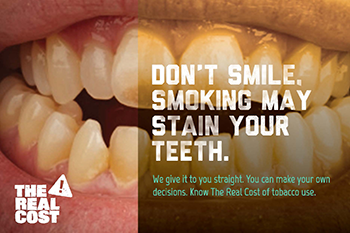
The Real Cost campaigning advertisement (Bessette, 2018).  

Effective calls to action are specific. The Food and Drug Administration originally launched the campaign “The Real Cost” in 2014. The overall goal of the campaign was to educate young adults and teenagers on the harmful effects of vaping and tobacco use. Their most recent call to action is for their customers to know the real cost of smoking cigarettes. There is no beating around the bush with the language in their call to action. The message is specifically telling the audience that they should know the real cost of smoking cigarettes. 

#5 Tell Better Stories 

Effective calls to action show target communities how the solution will help solve the problem. The problem being tackled by Dove US is the bad impression that social media can make on impressionable young minds.  

Cost of Beauty: A Dove Film | Dove Self-Esteem Project

The solution to this problem, as explained by Dove, is to bring awareness to the severity of the situation by telling us Mary’s story in the above video. Dove offers a solution to sign an online petition to pass the Kids Online Safety Act. The Kids Online Safety Act essentially protects kids from seeing content that has been found to be harmful to their mental health. By communicating with images, the call to action evokes emotion with intention and tells a story of a girl who needed protection. 

Effective calls to action are easily understood and can be carried out by the general public with minimal effort. Dove has countless resources listed on their website to help make social media a safer place for kids. 

Takeaways

We all can make a difference in our community even if we are public relations professionals in charge of a large agency. Public Interest Communications starts with

#1 Joining the community

#2 Communicating through images

#3 Evoking emotion with intention

#4 Creating meaningful calls to action

#5 Telling better stories. 

Your business has the ability to reach profit goals while helping your target population by finding shared values. 

Joining your community is the first step to creating positive social change. 

Up ↑