Back To Our Roots: Agritourism In The Greenbrier Valley

By Mason Deel, Cassidy Falk, Paul Henry, Alessia Mangan

Whether you travel solo, with friends, or with family, the Greenbrier Valley region has something for everyone, including many farm-based and agriculturally oriented businesses. By teaming up with WVU Extension, MHA plans to show residents and visitors alike that the agritourism opportunities in the Greenbrier Valley can offer them a truly wild and wonderful experience.

What Were We Up Against?

After meeting with our client, Dee Singh-Knights, the group’s main challenge was to increase the appeal of agricultural tourism and related businesses to a more diverse audience. Often, these groups lacked awareness of these businesses, or as the client put it, didn’t see people who looked like them enjoying such activities.

Key Insights of Our Campaign

At the beginning of the semester, the group had a solid foundation to build on. The materials passed along from prior semesters included a brand guide, preliminary business lists (which included a map of all these businesses and descriptions of each), and physical designs like signage and stickers complete with a logo to use.

The account team initially reviewed a previous MHA campaign to gain insights into the audience’s preferences and expectations. Through cross-examination of qualitative and quantitative research, it was found that people were interested in agriculture-related offerings in the Greenbrier Valley region but were generally unaware of where businesses were located, what they offered, when they were open, and their impact on the community. 

Further, many of these businesses are one-man shows or small staffs, and the work provided would need to be as easy to implement. Also, these small businesses aren’t always the most tech-savvy, meaning the group had to ensure anything provided to them was thorough and easy for anyone to use so that they could focus on their business. 

Next, the team delved into secondary research focused on three key points: past successful agritourism and DEI campaigns, influencer strategies, and West Virginia’s cultural history. 

A group of rectangular signs

Description automatically generated

Target Audiences

 Based on research, the team also identified three audiences: young adults looking to immerse themselves in West Virginia’s culture, middle-aged parents looking for cherished moments, and retired adults who value experiences centered around health, relaxation, and meaningful family visits.

This work will be meaningful to these people because of its historical aspect and West Virginians’ great state pride. By highlighting these experiences, people can connect with the state and its people unlike any other experience.

The Central Message

The team wanted a clear and concise message that would build a sense of community. When you experience something as fun and unique as an agritourism business, you will ask yourself the same question: “Where to next?”

What We’ve Created

To achieve our goals this semester, the team focused on four main strategies: digital media, media relations, influencer relations, and community relations.

Crawl the GBV

Central to the MHA’s efforts was the planning for a farm crawl on June 29. This self-guided tour allows participants to pick their own adventure. As a kickoff, an info session was held, where a presentation, meet-and-greet, merchandise, and much more kicked off collaboration. 

A bag with brochures and a keychain

Description automatically generated A person standing next to a table with food on it

Description automatically generated A table full of food

Description automatically generated

Collateral Material

As part of collaborating with businesses participating in Crawl the GBV, the team also produced materials for businesses and event attendees. Recognizing that some businesses are off the beaten path, signage was created to designate participating businesses, while window decals were developed to help guests find other destinations. The QR code on the decal directs to a webpage with all the businesses and an interactive map. 

Since cell phone service isn’t guaranteed in the region, a print map of participating businesses, in brochure form, was developed for event attendees to plan their itinerary. Tote bags and key chains were also produced to serve as a fun, reusable takeaway from the event.  Finally, shirts were produced for event volunteers to wear on the day of the event. A close-up of several promotional items

Description automatically generated

Digital Strategy

One of our key strategies was social media posts containing fun facts about the different agribusinesses in the Greenbrier Valley. The wild and wonderful graphics will be published on Instagram and Facebook on set days leading up to the farm crawl.

Media Relations

On April 10, the team took local media on a tour of partner businesses in the Greenbrier Valley. The itinerary was specified for each agribusiness, and a fun fact sheet was provided. After the tour, News 59 Beckley W.Va published a broadcast story, and the West Virginia Daily News published a news article with promises from each for more in-depth stories of these partner businesses.

Influencer Relations

Influencers were engaged to highlight further the unique opportunities businesses in the region provide. Two plan to travel to the region in the coming months leading up to Crawl the GBV. These individuals will highlight the eclectic opportunities for diverse populations to enjoy all that Greenbrier Valley offers. 

Deliverables, media relations, merchandise, events, and social media posts are an effort to promote agritourism in the Greenbrier Valley. These efforts help our team reach our campaign goals of increasing the appeal of agricultural tourism and businesses to a broader and more diverse audience to foster increased awareness and community involvement.

Tourism is growing at an exponential rate in Wild & Wonderful West Virginia – from cave and river adventures, to resorts and spas, there is something for everyone to try and love. But what about the opportunities to connect with local communities and learn about the heritage of Appalachia? Businesses like farm-to-table restaurants, farm stays, u-pick farms and distilleries offer family-friendly adventures and hands-on experiences that are uniquely Appalachian. 

The challenge, however, is that people are largely unaware of the more than 200 agritourism and farm based experiences found only in the Mountain State. To overcome this, MHA and WVU Extension partnered to craft a campaign that takes visitors and residents alike on a route to the roots of Appalachia.

What we learned

To determine the best path, the account team looked to other states to learn how they were promoting the industry and conducted interviews with tourism authorities, agritourism business owners and experts. Recognizing we needed to pilot the ideas we generated, the group identified three main regions that were positioned for growth: the Eastern Panhandle, Potomac Highlands, and New River Valley/Greenbrier regions. 

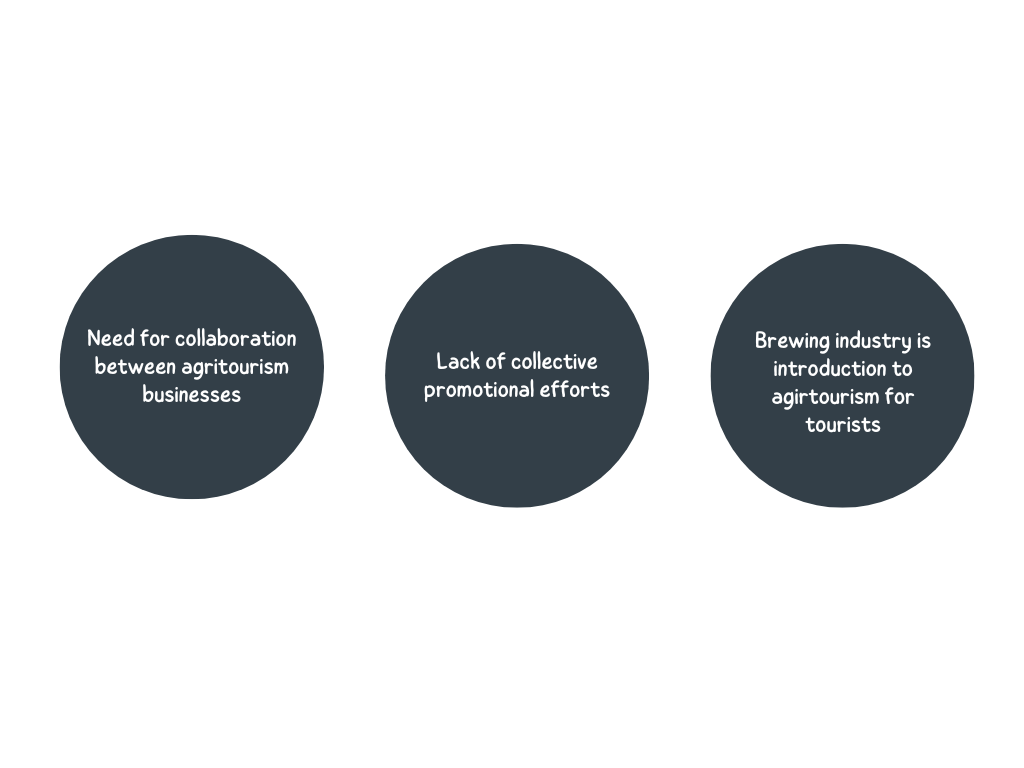
We also learned a lot about what the businesses felt were the best first steps to achieve the campaign goals, as well as who would be most likely to enjoy the deeply rooted traditions of the Appalachian experience. To be successful, we also needed to recognize a few key insights: 

Who we connected with

While we knew that farm-based fun wasn’t the experience for everyone, we learned that there were some audience segments that were craving a unique experience and new family tradition. 

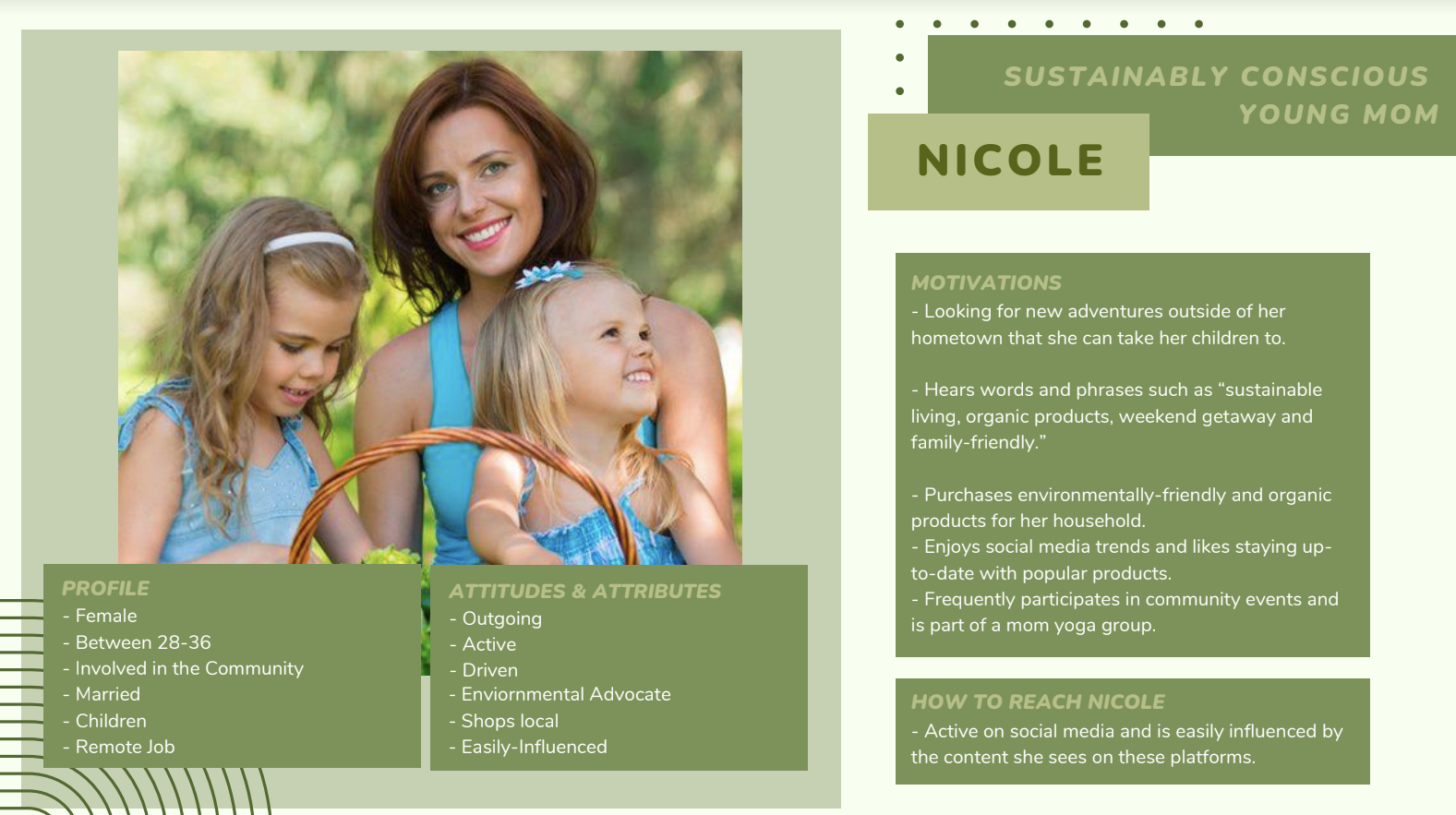
The first audience segment was the sustainably conscious young mom. The primary goal for this audience segment was to bring awareness to the many family-friendly agritourism experiences that the eastern part of the state has to offer. 

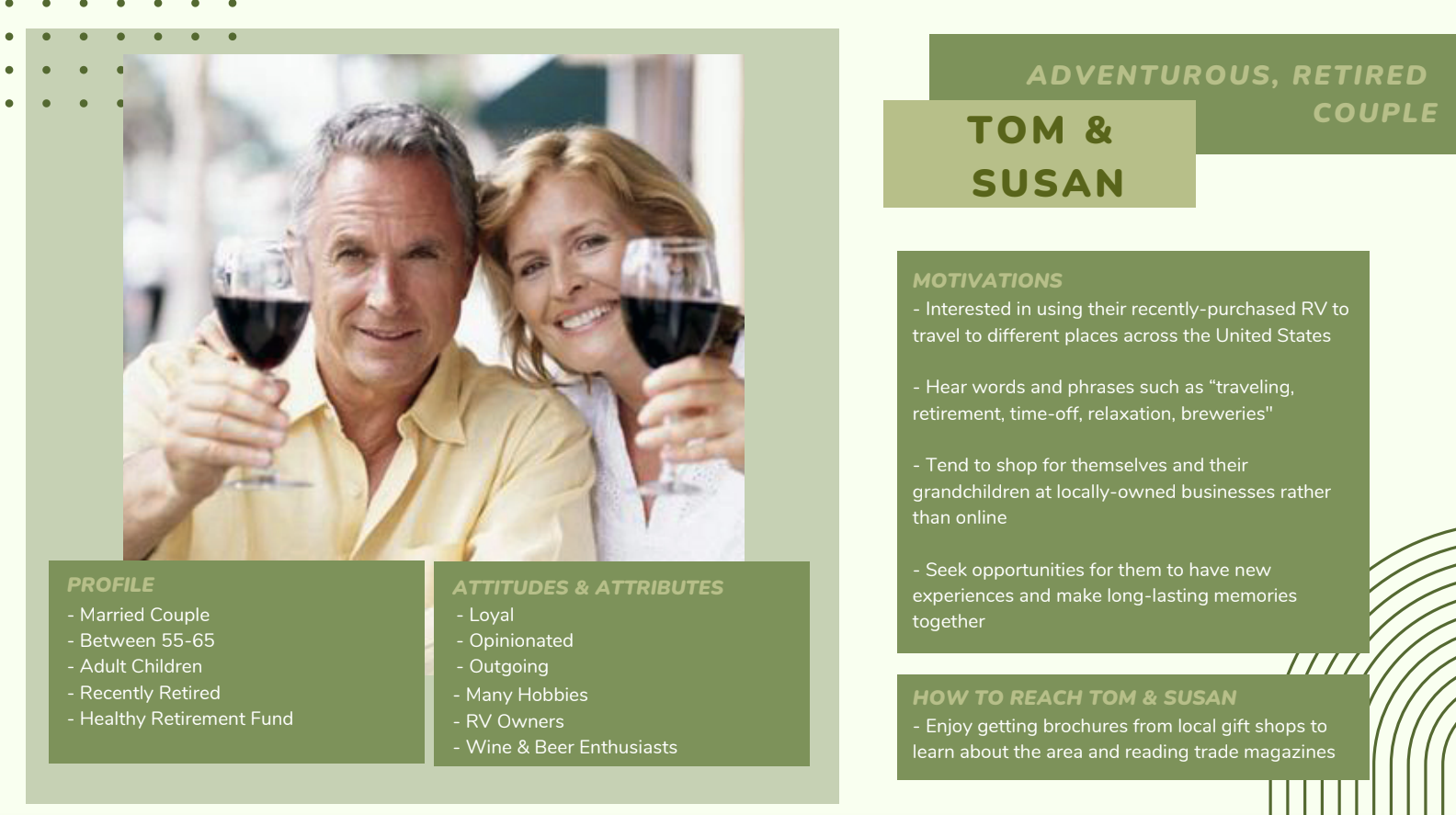
The second audience segment identified was the adventurous, retired couple. The primary goal of targeting this segment was to show those who have the time to travel and are seeking memorable experiences that there are many relaxing and novel agritourism opportunities throughout the eastern part of West Virginia. 

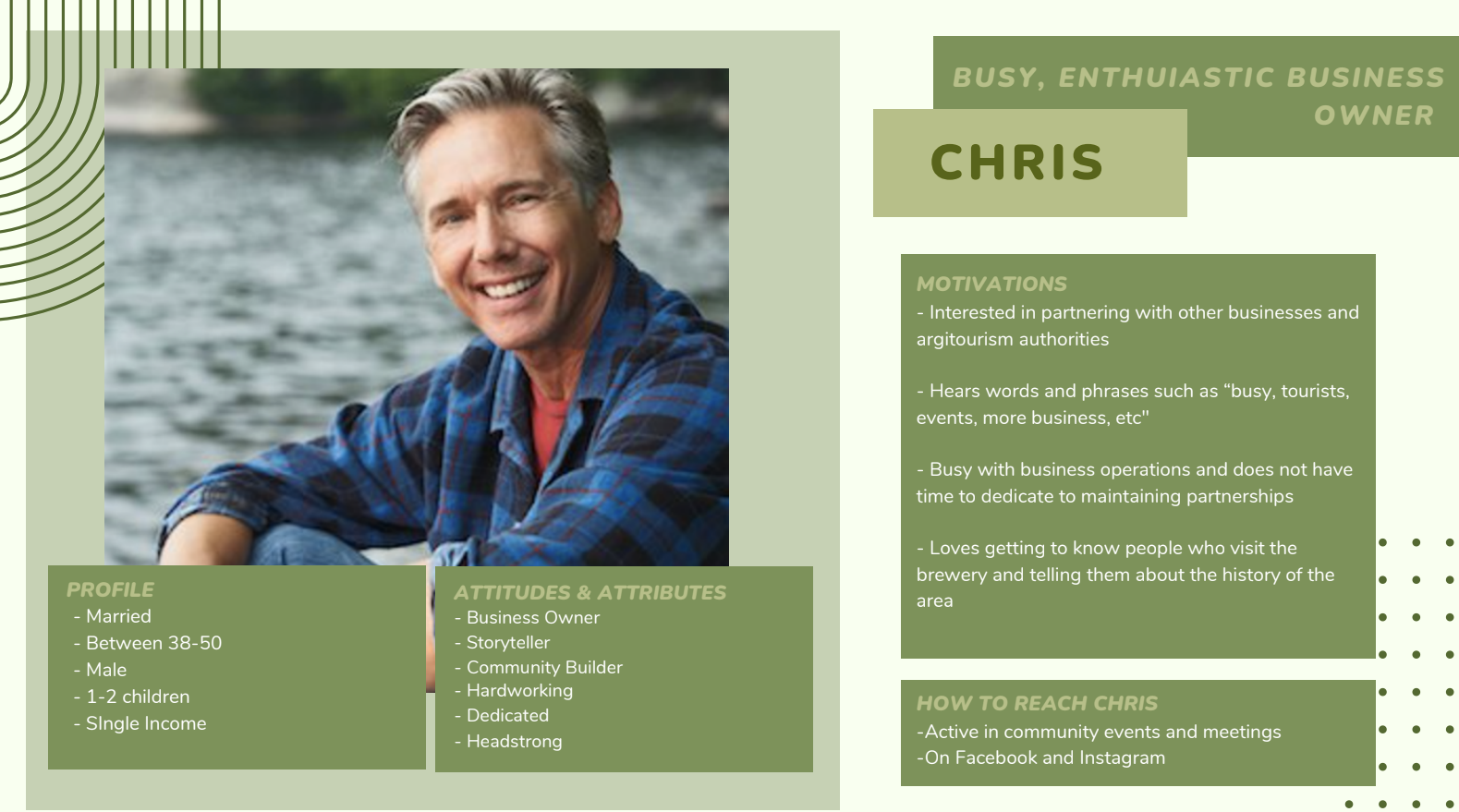
The last audience segment that the group identified were busy, enthusiastic business owners in eastern West Virginia. The main goal of pursuing this audience segment was to show that agritourism businesses in eastern WV cultivate environments to pursue passions. 

What we created

Based on our research, we knew the first step was to cultivate relationships with a variety of businesses ranging from lodging to farms and restaurants to breweries. For these businesses we wanted to provide them a way to connect with one another, while also elevating visibility of their own business.  To accomplish this we created a variety of digital and print assets.  

Meet Me in The Mountain State Guides

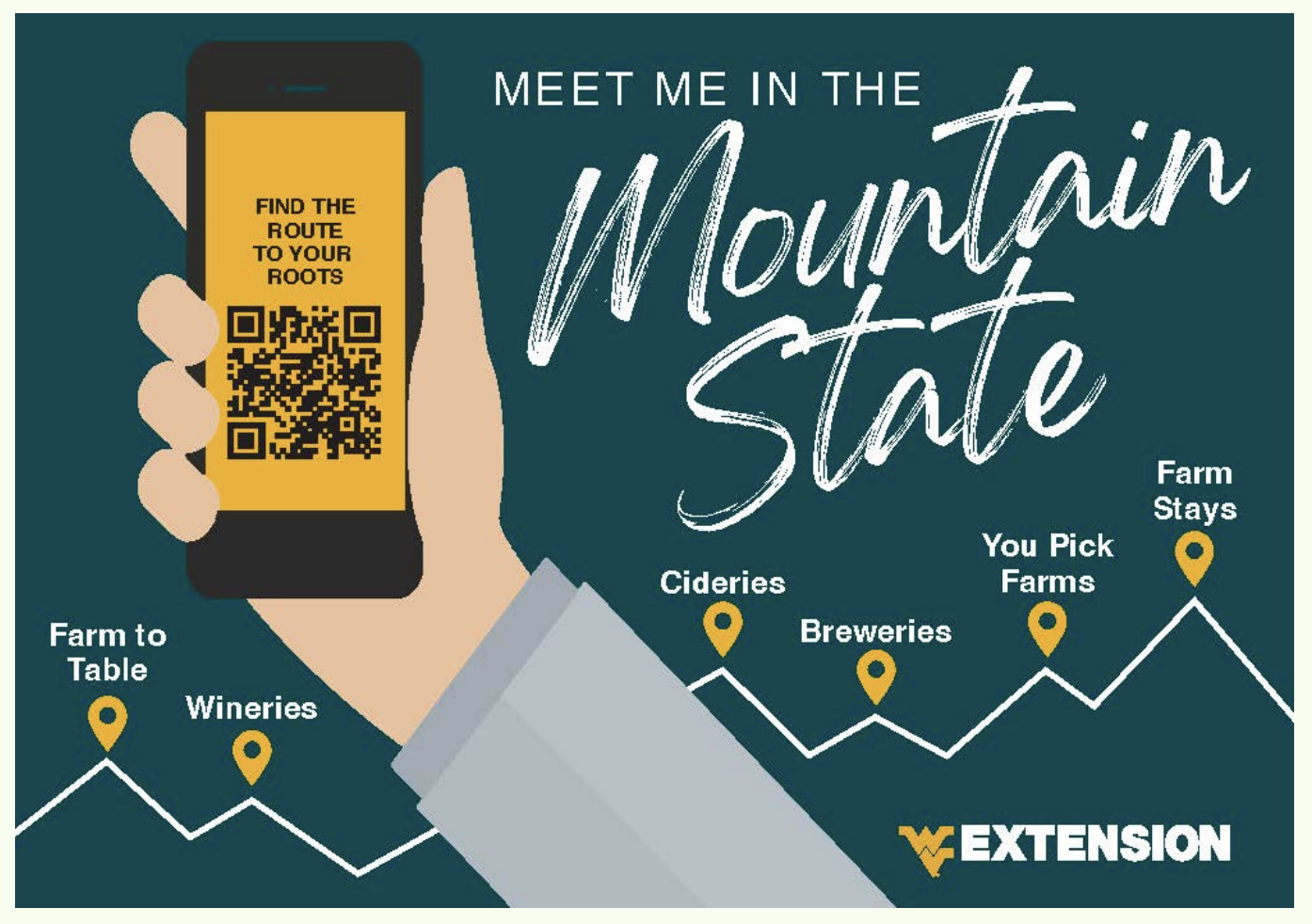
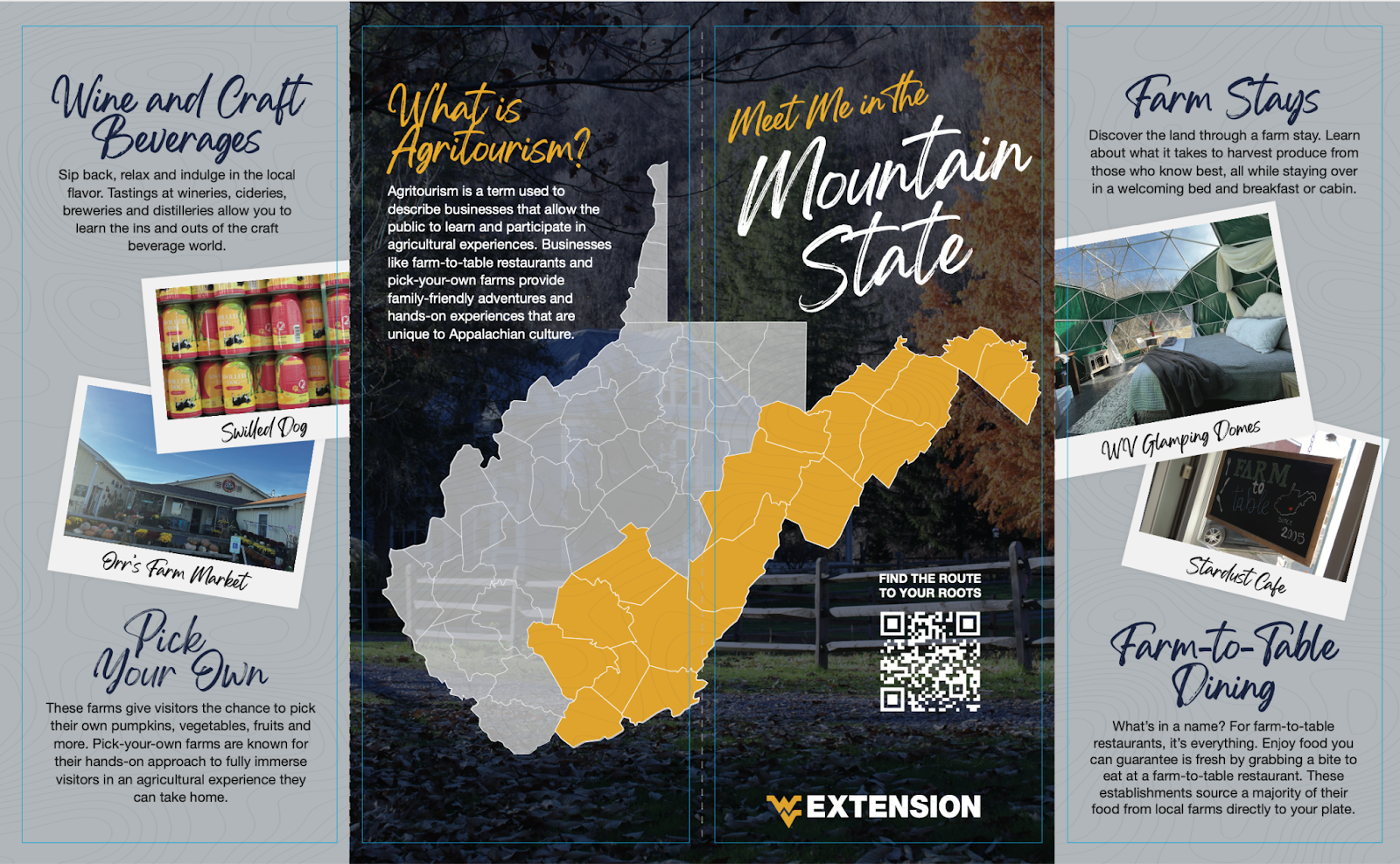
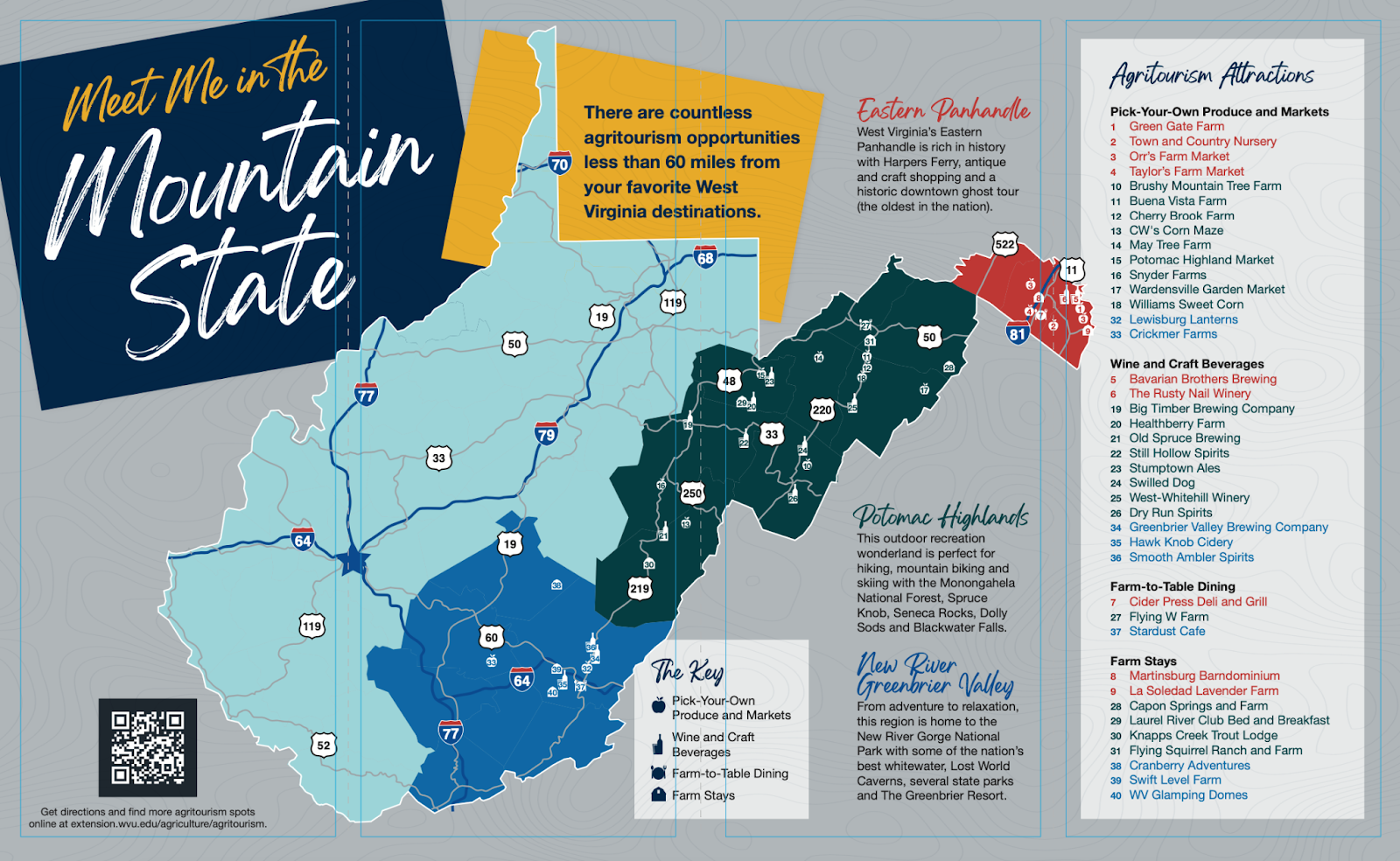
Digital and downloadable travel guides were published on the WVU Extension website.  This one stop destination for all things farm-based allows tourists and travelers an easy to find list of businesses in the region.  To drive traffic to the site, window decals including a QR code were provided to all partner businesses. 

To increase awareness of agritourism in general, attractive posters were also created as a fun and artistic way to demonstrate the Appalachian roots of farm-based businesses.   

Brochures were created for distribution at visitor centers throughout the state and through partnered businesses. The brochure included information about agritourism in general and a helpful map highlighting what was in each region. 

Enlisting the Support of Influencers and Travel Writers

To increase our reach and awareness, the team developed a list of micro influencers with a passion for travel and an engaged following.  Targeted influencers ranged from people who loved to share their passion for the Mountain State to those who were known for finding exciting outings in unique places. We also reached out to travel writers and bloggers at respected publications ranging from The Washington Post to WV Tourism and WV Living to Virginia Travel tips. These experts offered another way to connect audiences with the rich stories, deeply rooted traditions and tapestry of farm-based opportunities in the eastern portion of the state. 

Optimizing Businesses Digital Footprints

Our research also indicated that many of the farm-based and agritourism operators didn’t have extensive knowledge of how to promote their businesses online.  As a first step to improve their searchability, the team developed instructional SEO tutorials, keywords lists and optimized content. These resources were provided to businesses so that they can easily implement these strategies and improve their digital footprint.  

What we accomplished

While the work is never done, the team accomplished many things that lay the foundation for ongoing success. A few highlights include:

  • Partnering with nearly a dozen businesses in the Eastern Panhandle New River-Greenbrier Valley regions. 
  • Securing 133 page views on the Eastern Panhandle guide and 104 page views on the New River-Greenbrier Valley guide 
  • Confirming interest from two influencers, four publications and one podcast.
  • Presenting SEO strategies to 21 owners and operators with many committing to implementation 

By Jillian Peyton

Establishing a unique, memorable brand is not easy in today’s highly competitive market. The media landscape is evolving daily, and creative teams struggle to match the pace of change while maintaining a unique identity that matches their brands’ identities.

All the while, brands trying to emulate the latest trends risk being outperformed by competitors with similar messaging. For real success, a brand must outwit, outsmart and be more imaginative than its competition. On top of that, a brand must beat others to the punch. 

According to a study by The Center for Generational Kinetics, Gen Z, consisting of those born between 1997 and 2010, is the most “Internet-dependent generation,” and therefore, the generation with the most exposure to digital media. Understanding the latest trends is second nature for Gen Z, which has unbeatable expertise in the ever-changing media landscape.


“A brand is the set of expectations, memories, stories and relationships that, taken together, account for a consumer’s decision to choose one product or service over another.”

 – Seth Godin


How Gen Z Can Help Your Brand

Because of Gen Z’s youth, you may hesitate to trust them with the fate of your brand’s success. However, Gen Z is the first generation of true digital natives, and those with an interest in marketing and communications have the potential to revolutionize your brand’s image.

Having always grown up with the Internet and social media, Gen Z is accustomed to the constant development of new media platforms and shifting consumer expectations. Gen Z is already known to quickly adapt to new social media trends and corporate social responsibility expectations.

Social Media Trends

Gen Z is familiar with all social media platforms, including Facebook, Twitter, YouTube, Instagram, Snapchat, TikTok and BeReal. As social media platforms come and go, Gen Z quickly adapts and creates engaging content.

For consumers to be receptive to brands, creative teams must recognize social media’s capability to bridge the gap between brands and consumers. Gen Z appreciates this element in their own targeted messaging, and according to Sprout Social, Gen Z hopes to “interact with brands beyond the storefront.” 

Recognizing the need for brands to connect more with consumers on a personal level, Gen Z marketers only beginning their careers have already implemented this strategy in their content, simultaneously affirming their undeniable creativity. 

For example, Duolingo, an app for learning languages through self-paced lessons, has a TikTok account managed by Zaria Parvez, a Gen Z marketer who graduated in 2020. Duolingo targets Gen Z consumers through its TikTok, and its content distinguishes the brand from competitors through humorous (and unhinged) videos.

As of October 2022, Duolingo’s TikTok has 4.9 million followers, and the account has earned more than 97 million likes. None of the brand’s competitors, such as Rosetta Stone (430 TikTok followers) or Babbel (22,300 TikTok followers), distinguished themselves in such an organic, creative way that ignited consumer engagement and interest.

By choosing Parvez to manage its TikTok, Duolingo recognized the potential of a Gen Z marketer to creatively revolutionize its brand and help it stand out amongst competitors.

Corporate Social Responsibility

People of all ages expect brands to engage in authentic corporate social responsibility. In response, brands like Patagonia have increased their efforts to improve sustainability and support underserved communities.

According to public relations firm Edelman’s research, 70% of Gen Z is involved in a social or political cause. Across the globe, Gen Z has been at the forefront of political activism, including movements such as March For Our Lives and School Strike for Climate.

Gen Z is passionate, unafraid to stand up for its beliefs and can emphasize your brand’s dedication to social responsibility and change through actionable and authentic means.

Some companies may be wary of the possibility of invoking criticism by establishing the social responsibility important to their brand; however, in the long run, people remember actions better than words. Allowing Gen Z to align your brand with the company’s most meaningful causes will essentially be both rewarding and unforgettable.


Next Steps: Trust Gen Z to Make Your Brand Remarkable

We know trusting young advertising and public relations professionals with your company’s image can be daunting, but the outcome will surprise you.

Your company needs the support of a team who truly understands the shifting intricacy of the media landscape. Gen Z not only understands change, but they thrive with it. Without missing a beat, Gen Z can learn how to succeed with any new media platform and connect with your audience by understanding their most important needs.

Creative teams worldwide are trying to accomplish the same goal for their brand, making it increasingly difficult for any brand to catch the public’s interest. Simultaneously, the public is growing increasingly distrustful of any brand messaging, instinctively ignoring most brand messaging they encounter.

Gen Z understands this mindset, and they can easily distinguish between authenticity and baseless promises. Further, Gen Z is the first generation of true digital natives accustomed to constant change, innovation and shifting consumer expectations.

Because of this, Gen Z understands worthwhile content, and they know how to produce and deliver it through your brand in the best possible way. With so many competitors seeking the same outcome, Gen Z’s unmatched confidence and creativity are priceless.

By allowing Gen Z to take the reins, your up-and-coming brand can undergo a positive transformation, cutting through the noise of competitors and catching the eye of your audience.

Up ↑